
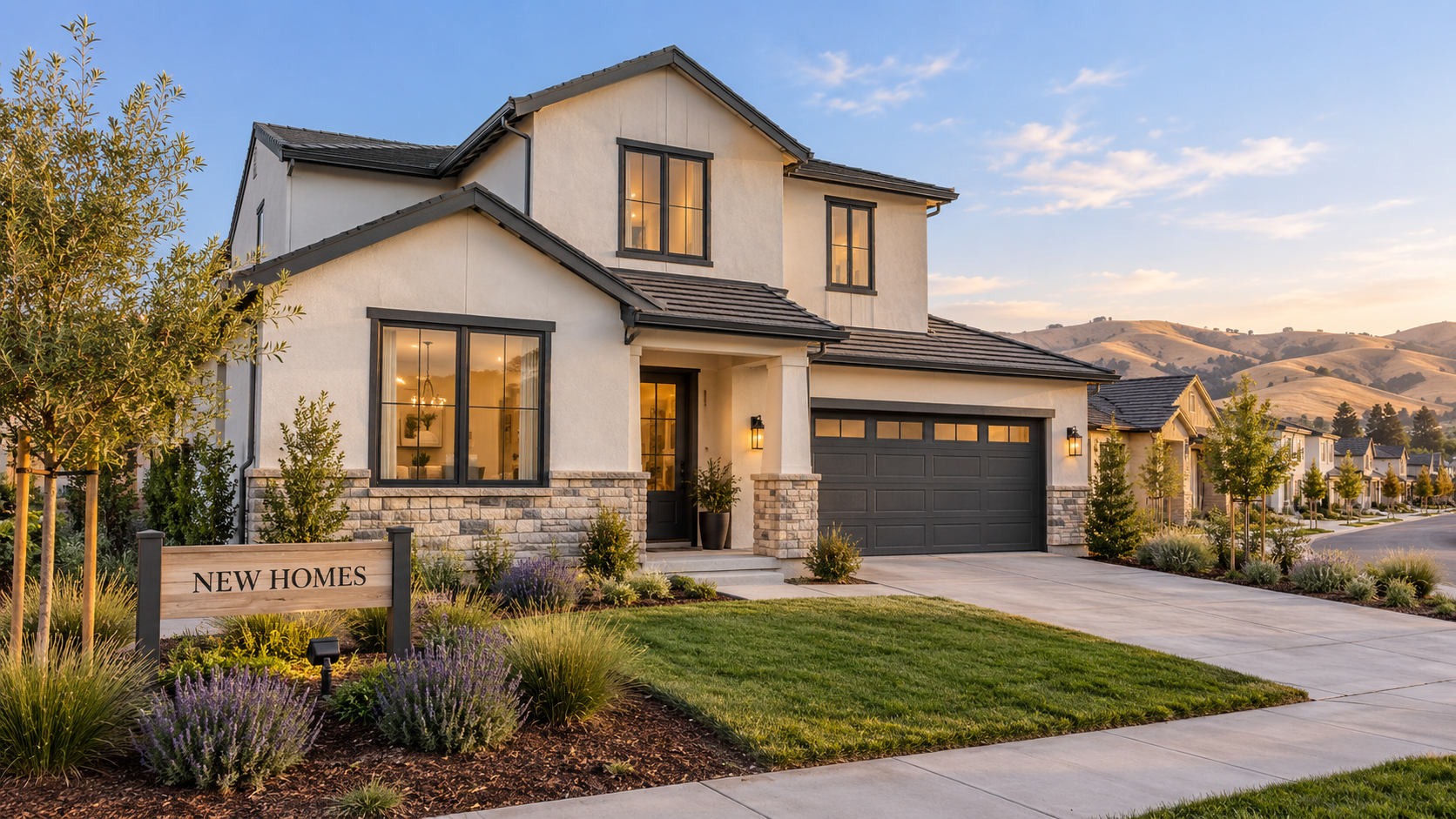
New construction home in Hollister, California
Buying a brand-new home can be exciting. You may have the opportunity to select a floor plan, choose a homesite and personalize certain finishes before construction is completed.
However, purchasing a new construction home is not always as straightforward as it appears. Builder contracts, lot premiums, upgrade costs, financing incentives and construction timelines can make the process considerably different from purchasing an existing home.
One of the most common questions buyers ask is:
Do I need my own real estate agent when buying a new construction home in Hollister?
Although buyers can visit a builder’s sales office without an agent, having an experienced local real estate broker representing your interests can provide valuable guidance throughout the process.
Important: If you would like your own real estate agent involved, contact the agent before visiting or registering with a builder. Some builders have specific registration and representation requirements that must be followed during the buyer’s first visit.
Who Does the Builder’s Sales Representative Represent?
When you walk into a new-home sales office, you will typically be greeted by a knowledgeable and helpful sales representative. That representative can explain the builder’s available floor plans, homesites, pricing, upgrades and estimated construction schedule.
However, the sales representative works for the builder.
Their responsibility is to provide information about the builder’s homes and protect the builder’s interests throughout the transaction. This does not mean the representative will treat you unfairly. It simply means that the representative is not acting as your independent real estate advisor.
A buyer’s real estate agent or broker can provide a separate perspective focused on your needs, financial considerations and long-term real estate goals.
Why Should You Contact an Agent Before Visiting a Builder?
Many builders require a buyer’s agent to accompany the buyer or register the buyer during the first visit to the community. Requirements vary by builder and can change.
If you tour a sales office and register without your agent, the builder may not recognize that agent as your representative later.
The safest approach is to contact your agent before you:
Visit a new-home sales office
Complete an online registration form
Request information directly from a builder
Schedule a model-home tour
Join a builder’s priority or interest list
Place a deposit on a homesite
I can contact the community in advance, confirm its registration policy and help coordinate your first visit.
[IMAGE 2]
Suggested image: A buyer and real estate agent reviewing a subdivision map or floor plan inside a new-home sales center.
Suggested alt text: Buyer reviewing a Hollister new construction community with a real estate agent
How Can a Buyer’s Agent Help With New Construction?
New-home communities often present buyers with numerous choices. The lowest advertised starting price may not reflect the final cost after considering the homesite, structural options, design selections, financing and ownership expenses.
Here are several ways a buyer’s agent can help.
1. Compare Different Hollister Builders
Each builder offers different floor plans, included features, upgrade programs, lot sizes, architectural styles and estimated completion dates.
Instead of evaluating one community in isolation, I can help you compare different new-construction options throughout Hollister, including:
You can also visit my complete Hollister new construction guide to explore local builders, communities and buyer resources.
2. Evaluate the Total Purchase Price
A builder’s advertised price is often a starting point. The final purchase price may include:
Homesite or lot premiums
Structural options
Flooring and countertop upgrades
Cabinet and appliance packages
Electrical additions
Solar equipment
Landscaping
Window coverings
HOA dues, if applicable
Community assessments
Closing costs
A home that initially appears less expensive may ultimately cost more after upgrades and premiums are added.
Your agent can help you organize these costs and compare the completed price with similar new and resale homes.
3. Understand Builder Incentives
Builders may offer incentives such as:
Closing-cost credits
Interest-rate buydowns
Design-center allowances
Appliance packages
Reduced lot premiums
Price reductions on completed homes
Financing incentives through an affiliated lender
These programs can be valuable, but they should be evaluated carefully. A large closing-cost credit does not automatically mean the home offers the best overall value.
Important questions include:
Does the incentive require using the builder’s preferred lender?
How does the preferred lender’s rate compare with outside lenders?
Is the incentive tied to a particular homesite or completion date?
Could the incentive be applied differently?
Are there restrictions or deadlines?
Builder incentives, pricing and availability can change frequently. Buyers should review the complete terms before making a decision.
Can a Real Estate Agent Negotiate With a Builder?
Negotiating with a builder is different from negotiating with an individual homeowner.
Builders may be reluctant to reduce the published price because lower sales prices can affect future appraisals and sales within the community. However, depending on the home, construction stage and market conditions, there may be opportunities involving:
Closing-cost assistance
Financing incentives
Design-center credits
Included appliances
Lot premiums
Upgrade allowances
Move-in-ready inventory
Deposit terms
Completion or closing timelines
Not every item is negotiable, and the available opportunities vary by builder and community. An experienced agent can help identify appropriate questions and determine whether the overall offer is competitive.
Choosing the Right Homesite
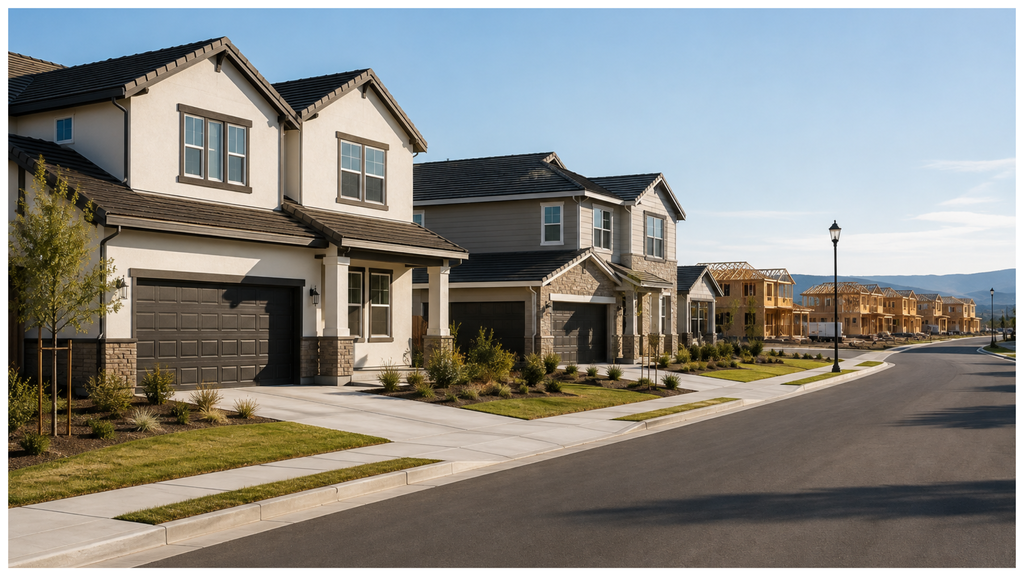
The floor plan is only one part of the decision. The location of the home within the community can affect privacy, sunlight, traffic, views and future resale appeal.
Before selecting a homesite, consider:
Street orientation
Morning and afternoon sunlight
Corner versus interior location
Proximity to an entrance
Nearby traffic
Neighboring land uses
Utility equipment
Drainage areas
Future phases of construction
Planned roads or community amenities
Backyard size and usability
Potential view obstructions
A subdivision map can reveal details that may not be obvious while standing on an undeveloped lot.
Whenever possible, visit the homesite at different times of day and review the surrounding lots before making a final selection.
Should You Pay a Lot Premium?
A lot premium may be worthwhile when the homesite provides a meaningful advantage, such as:
A larger backyard
Additional privacy
A corner location
A cul-de-sac
Open-space adjacency
A desirable view
Better positioning within the neighborhood
However, buyers should not assume that every dollar spent on a lot premium will automatically be recovered when the home is sold.
The long-term value depends on whether future buyers are likely to recognize and pay for the same benefit.
How Should You Approach Builder Upgrades?
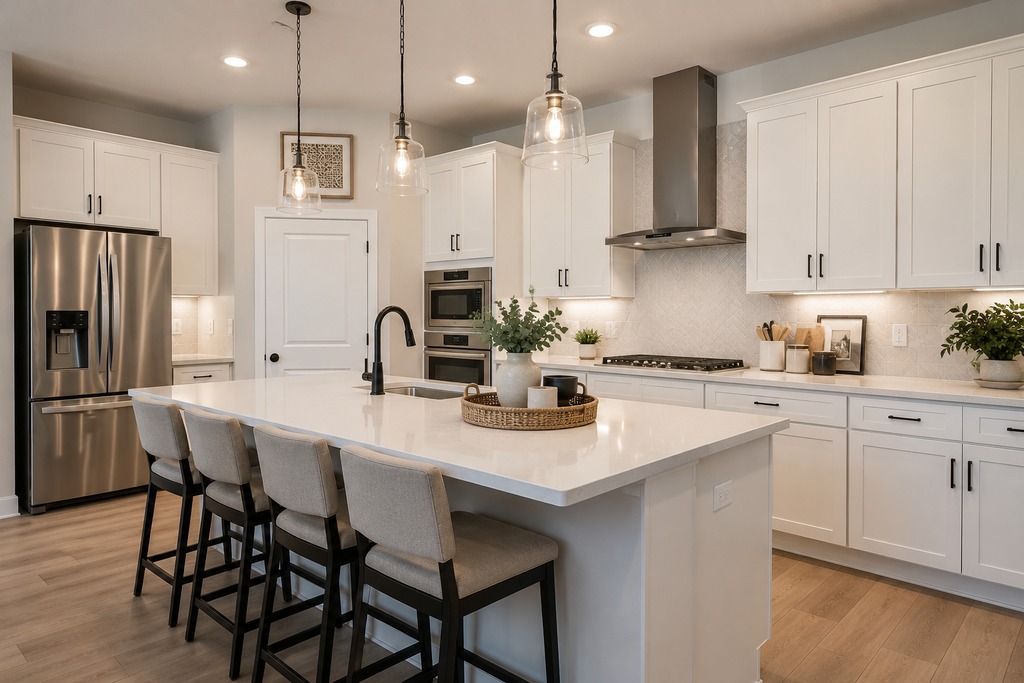
Model homes are designed to showcase the builder’s most attractive options. Many of the finishes displayed in a model may not be included in the base price.
Before visiting a design center, establish a realistic upgrade budget and separate your choices into three categories:
Structural Options
Structural changes are generally easiest to complete during construction. These may include additional rooms, expanded doors, covered patios or changes to the electrical and plumbing layout.
Functional Improvements
These are upgrades that improve daily use, including additional outlets, enhanced lighting, storage, flooring or kitchen functionality.
Cosmetic Choices
Paint colors, decorative fixtures and certain finishes can often be changed after closing. In some cases, completing these improvements independently may be more economical.
Focus first on options that would be difficult or expensive to add later.
Should You Have a New Home Inspected?
A new home can still have construction defects, incomplete work or items requiring correction.
Buyers should consider independent inspections at appropriate stages of construction, subject to the builder’s policies and the terms of the purchase agreement.
Depending on the construction schedule, inspections may include:
Pre-drywall inspection
Final home inspection
Roof inspection
Sewer-line inspection
Follow-up inspection before the warranty period expires
The builder may also conduct a new-home orientation or walkthrough before closing. During this walkthrough, buyers can identify incomplete or damaged items for the builder’s attention.
Your purchase contract and builder warranty should explain the inspection process, correction procedures and applicable deadlines.
What Happens if Construction Is Delayed?
Builder completion dates are generally estimates. Weather, labor availability, inspections, utility connections, permits, materials and supply-chain issues can all affect the schedule.
Construction delays can be especially important if you are:
Selling another home
Ending a rental agreement
Coordinating a school change
Locking an interest rate
Scheduling movers
Planning improvements after closing
Avoid making nonrefundable commitments based solely on an estimated completion date. Carefully review the builder contract to understand how delays, extensions and closing notices are handled.
[IMAGE 5]
Suggested image: A new home under construction with framing completed and workers visible on the site.
Suggested alt text: New construction home being built in Hollister, California
Should You Compare New Construction With Resale Homes?
Even if you prefer a brand-new home, it is helpful to compare the builder’s offering with existing homes in the surrounding area.
A resale home may offer:
A larger or more established lot
Completed landscaping
Window coverings
Fencing
Mature trees
Fewer immediate construction disruptions
Established neighborhood conditions
Improvements already included in the price
A new home may offer:
Newer building systems
Contemporary floor plans
Energy-efficient features
Builder warranties
Personalization opportunities
Lower initial maintenance needs
The correct choice depends on the total price, location, lot, timeline and your personal priorities.
Read my complete comparison of new construction versus resale homes before deciding which option is right for you.
Questions to Ask Before Signing a Builder Contract
Before committing to a new home, consider asking:
What features are included in the advertised price?
Is there a premium for this homesite?
Which design selections can still be changed?
When do upgrade deposits become nonrefundable?
Are incentives tied to the builder’s preferred lender?
What happens if the home is not completed on schedule?
When will the buyer receive notice of the closing date?
What inspections are permitted during construction?
What warranties are included?
Are solar panels purchased, leased or otherwise financed?
Is there an HOA or another community assessment?
What will be built on the surrounding lots?
Are there future roads or development phases nearby?
What landscaping and fencing are included?
What expenses will the buyer have immediately after closing?
Builder purchase agreements are prepared for the builder and can differ substantially from standard California resale contracts. Buyers should read all documents carefully and consult the appropriate legal, tax, lending or inspection professionals when necessary.
Does Using a Buyer’s Agent Increase the Price of a New Home?
Builder policies regarding buyer-agent compensation vary by community, home and sales program.
Do not assume that representation is automatically free or that the builder will always compensate the buyer’s agent. Before entering into a representation agreement or touring a community, ask your agent to explain how compensation will be handled.
The important point is to establish representation and compensation clearly before beginning the process.
How I Help Hollister New-Construction Buyers
As a Hollister native and Broker/Owner of Muenzer & Co. Real Estate, I help buyers look beyond model-home presentation and evaluate the complete purchase.
My role can include helping you:
Identify new-home communities
Compare builders and floor plans
Coordinate community visits
Understand builder registration procedures
Compare incentives and financing options
Evaluate homesites and lot premiums
Review comparable resale properties
Organize upgrade costs
Coordinate inspections
Prepare for walkthroughs and closing
Consider the home’s future resale appeal
The objective is not simply to purchase a new home. It is to select the right home, homesite and financial structure for your needs.
Planning to Visit a Hollister New Home Community?
Contact me before registering online or touring a builder’s sales office.
I can help you compare Hollister builders, communities, floor plans, homesites, incentives, upgrades and resale alternatives so you can make a more informed decision.
Contact Seth Muenzer
Seth Muenzer, Broker/Owner
Muenzer & Co. Real Estate
CA DRE #01977416
831-245-0050
Builder and community information is provided for general informational purposes and is subject to change. Muenzer & Co. Real Estate is not affiliated with or representing the builders mentioned in this article unless specifically stated. Buyers should verify current pricing, availability, incentives, registration requirements and compensation policies directly with the applicable builder and their real estate representative.
Check out this article next