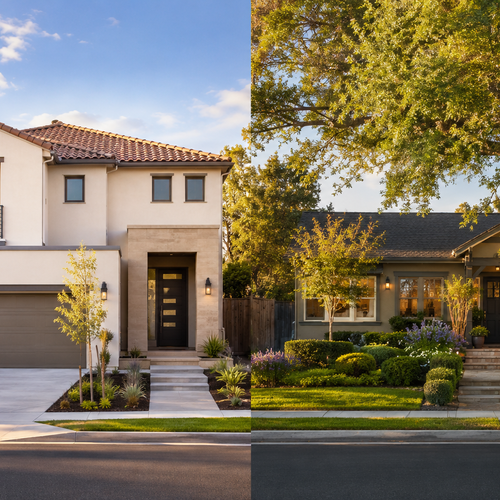
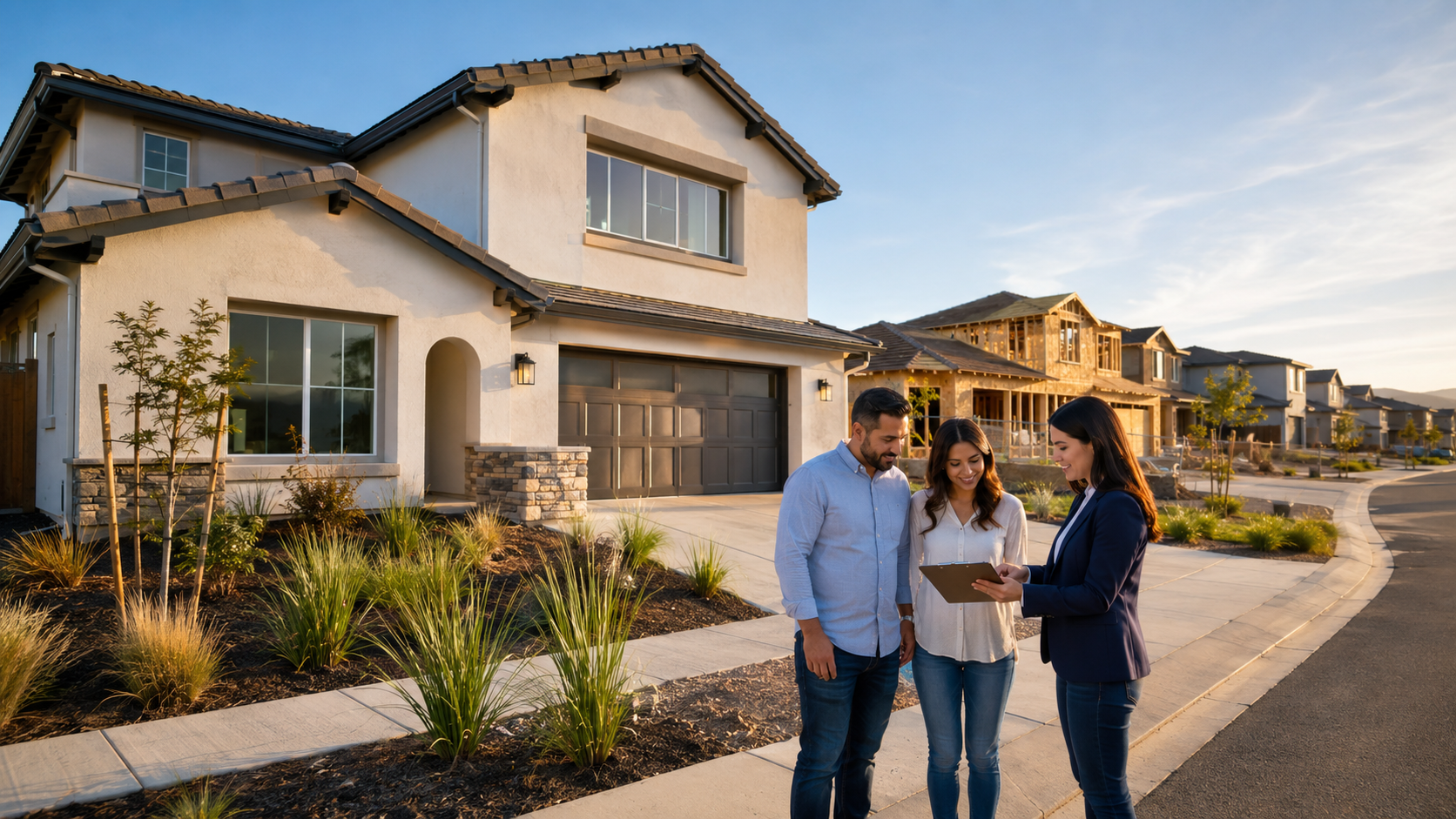
Buying a brand-new home is exciting. You may have the opportunity to choose a floor plan, select finishes, benefit from modern energy-efficient features, and move into a home that has never been occupied.
However, buying a new construction home in Hollister is different from purchasing a resale property. Builder contracts, deposits, incentives, construction schedules, inspections, upgrade costs, solar requirements, and agent-registration policies can all affect the transaction.
This guide explains the major steps involved in buying a new home in Hollister and the questions you should ask before signing a builder’s purchase agreement.
Why Buyers Are Considering New Construction in Hollister
Hollister continues to attract buyers looking for newer homes, additional living space, access to outdoor recreation, and a community that maintains its Central California character.
New-home communities may offer features such as:
Contemporary floor plans
Open kitchens and living areas
Energy-efficient windows and appliances
Solar energy systems
Smart-home technology
Flexible rooms or home offices
Walk-in pantries
Larger primary suites
Electric-vehicle charging capabilities
Builder warranty protection
Available communities, floor plans, prices, incentives, and release dates can change frequently. Buyers should verify current information directly and avoid relying entirely on an older advertisement or online listing.
Step 1: Establish Your Budget Before Touring Communities
The first step is determining a comfortable monthly payment and total purchase budget. Remember that the advertised starting price may not represent the home’s final cost.
Your complete budget should account for:
Base purchase price
Homesite or lot premium
Structural options
Design-center upgrades
Solar equipment or financing
Landscaping
Window coverings
Appliances not included by the builder
Closing costs
Homeowners’ association dues, if applicable
Special taxes or assessments
Property insurance
Estimated property taxes
Moving expenses
A home advertised at one price may cost substantially more after the homesite, elevation, flooring, countertops, electrical options, and other upgrades are added.
Ask the builder for a written breakdown showing the total price and everything included with the home.
Step 2: Obtain Financing Preapproval
Before selecting a home, speak with a qualified lender and obtain a mortgage preapproval. This can help you understand:
Your estimated purchase limit
Required down payment
Projected monthly payment
Estimated closing costs
Available loan programs
How interest-rate changes could affect your payment
Builders frequently have affiliated or preferred lenders. The builder may offer closing-cost assistance, interest-rate incentives, or other benefits when a buyer uses a particular lender.
You are generally free to compare financing options. Ask an outside lender and the builder’s lender to provide written estimates so you can evaluate the complete loan package—not just the advertised interest rate.
Compare the rate, annual percentage rate, points, lender fees, mortgage insurance, closing costs, and total payment. A large builder credit does not necessarily mean that the affiliated loan is the least expensive option.
Step 3: Contact Your Real Estate Agent Before Visiting a Builder
One of the most important steps is contacting your real estate agent before visiting a new-home community, completing an online registration, or speaking extensively with the builder’s sales office.
Builders establish their own agent-registration policies. Some may require your agent to accompany you and register with you during your first visit. If you register without your agent, the builder may later limit your ability to receive independent representation through that agent.
The builder’s sales representative represents the builder’s interests. A buyer’s agent can help you:
Compare multiple Hollister communities
Review available homes and floor plans
Evaluate comparable sales
Compare builder incentives
Understand upgrade costs
Identify questions about the contract
Coordinate inspections
Monitor important deadlines
Prepare for the final walk-through
Evaluate the home’s future resale considerations
Discuss representation and compensation with your agent in writing before touring homes. Builder policies and compensation offerings vary by community and transaction.
Step 4: Compare Hollister Builders and Communities
Do not evaluate a new home based only on the model home. Compare the entire community and the builder’s overall offering.
When exploring new construction homes in Hollister, consider:
Community location
Commute and road access
Nearby schools and services
Floor-plan functionality
Homesite size and orientation
Parking and driveway space
Neighborhood density
Future development phases
Planned amenities
Homeowners’ association rules and dues
Special taxes or assessments
Standard features
Available upgrades
Builder reputation
Warranty procedures
Estimated construction schedule
Resale potential
Model homes are designed to present the builder’s best available options. They may contain extensive upgrades, premium landscaping, decorator furnishings, custom lighting, built-in cabinetry, and structural options that are not included in the base price.
Ask the sales representative to identify which features are standard and which are upgrades.
Step 5: Decide Which Type of New Home Fits Your Timeline
New construction is generally offered in several stages.
Completed or Quick Move-In Homes
A quick move-in home is completed or approaching completion. The builder has usually selected its finishes and options.
This can be a good choice when you need a more predictable closing date or do not want to make numerous design decisions.
Homes Under Construction
A home already under construction may offer a shorter wait while still allowing limited selections, depending on its construction stage.
Once materials have been ordered or installed, the builder may not permit changes.
To-Be-Built Homes
A to-be-built home may provide the greatest opportunity to select a floor plan, homesite, elevation, and finishes. It also typically involves a longer timeline and more exposure to possible construction delays or interest-rate changes.
The builder should explain when each selection must be made and whether deposits for upgrades are refundable.
Step 6: Select the Homesite Carefully
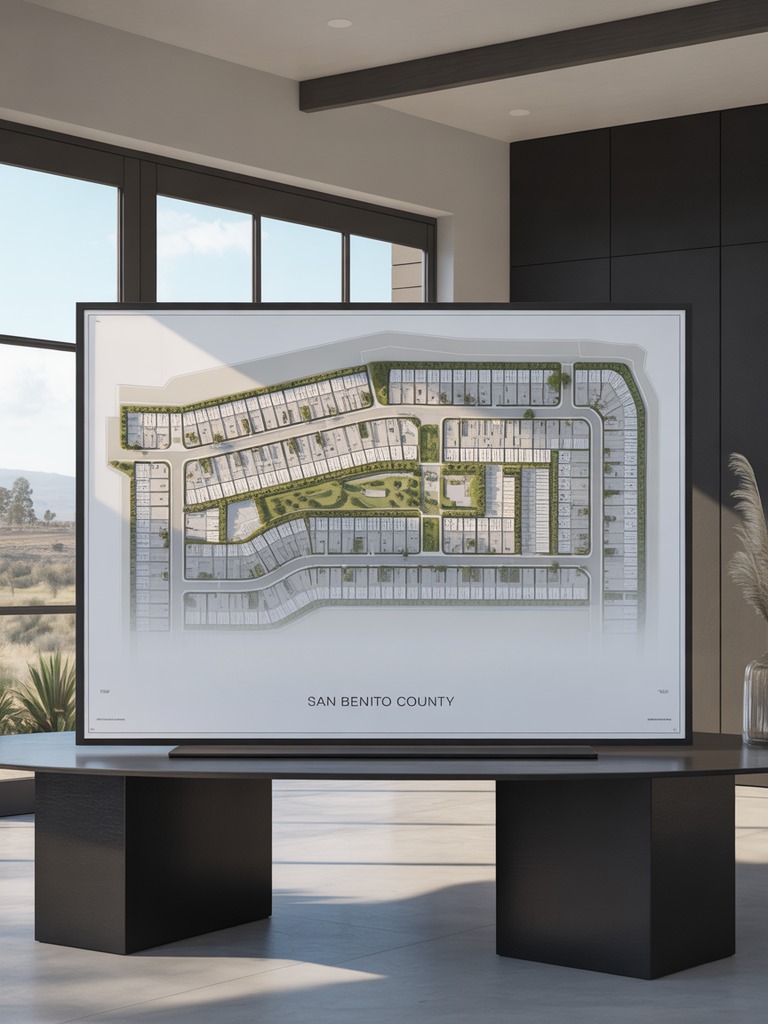
The homesite can affect your enjoyment of the property and its future resale appeal. A premium lot is not automatically the best lot for every buyer.
Consider:
Sun exposure
Backyard orientation
Lot size and shape
Distance from neighboring homes
Street traffic
Guest parking
Proximity to parks or common areas
Nearby drainage facilities
Retaining walls or slopes
Utility equipment
Future phases
Planned roads
Adjacent land uses
Noise sources
Views and whether they could change
Review the subdivision map and ask what may eventually be built around the homesite. An open area today may be part of a future phase.
A subdivision map or marketing illustration should not be treated as a guarantee that every proposed feature will be built exactly as shown.
Step 7: Understand the Builder’s Base Price and Upgrades
Builders generally begin with a base price and add the cost of the homesite, elevation, structural changes, and design selections.
Upgrades may include:
Premium homesites
Exterior elevations
Additional bedrooms or bathrooms
Multi-generational living spaces
Extended patios
Upgraded cabinetry
Countertops and backsplashes
Flooring
Appliances
Interior doors
Plumbing fixtures
Additional lighting
Electrical outlets
Data wiring
Window coverings
Landscaping
Before approving an upgrade, ask:
How much does it cost?
Must it be paid for upfront?
Is the deposit refundable?
Will it be included in the mortgage?
Will the home need to appraise with the upgrades?
Is it less expensive to complete after closing?
Could completing it later affect the builder’s warranty?
Prioritize improvements that would be difficult or expensive to add after construction, such as structural changes, room extensions, additional windows, electrical wiring, plumbing, and certain built-in features.
Cosmetic items may be easier to change after closing, but doing so can be inconvenient and may not always save money.
Step 8: Evaluate Builder Incentives Carefully
A builder may offer incentives on certain homes, especially completed inventory or homes scheduled to close within a particular period.
Possible incentives include:
Interest-rate buydowns
Closing-cost credits
Upgrade allowances
Appliance packages
Reduced lot premiums
Price reductions
Included design options
Ask whether the incentive requires you to use the builder’s affiliated lender, title company, or another service provider.
Compare the entire transaction. A lower interest rate may be valuable if you plan to keep the loan for an extended period, while a price reduction could affect the purchase price and future property comparisons differently.
Incentives may change without notice and may apply only to selected homes or closing dates.
Step 9: Review the Purchase Agreement and Disclosures
Builder contracts can be different from the forms commonly used for resale transactions. They are generally prepared to address the builder’s construction process and policies.
Before signing, understand:
Deposit requirements
Whether deposits are refundable
Financing deadlines
Estimated completion dates
The builder’s right to extend construction
Procedures for approving changes
Upgrade-payment requirements
Inspection access
Appraisal responsibilities
Default provisions
Final walk-through procedures
Warranty coverage
Dispute-resolution provisions
Homeowners’ association documents
Solar terms
Special taxes or assessments
For homes within a qualifying subdivision, buyers may also receive a California public report and other subdivision disclosures. Review these documents carefully and ask questions about anything you do not understand.
A real estate agent can help you understand the transaction, but legal questions regarding the contract should be directed to a qualified California real estate attorney.
Step 10: Prepare for Possible Construction Delays
A projected completion date is not always a guaranteed move-in date.
Construction can be affected by:
Weather
Labor availability
Material shortages
Utility connections
Permit processing
Inspections
Required corrections
Supply-chain problems
Changes requested by the buyer
Buyers who are selling another property, ending a lease, locking an interest rate, or arranging movers should maintain some flexibility.
Ask the builder how it communicates schedule changes and what happens if the home is completed earlier or later than anticipated. Be cautious about making nonrefundable moving arrangements too far in advance.
Step 11: Monitor Interest Rates During Construction
A buyer purchasing a completed home may be able to lock a mortgage rate shortly before closing. A buyer purchasing a home that will take several months to build may face greater uncertainty.
Ask your lender:
When can the interest rate be locked?
How long does the lock last?
Is an extended rate lock available?
How much does it cost?
What happens if construction is delayed?
Can the rate decrease if market rates improve?
How would a higher rate affect qualification?
Do not assume you will qualify for the same payment if interest rates change before the home is complete.
Step 12: Order Independent Inspections
A new home should still be inspected. New construction can have incomplete work, damaged materials, installation errors, or items requiring correction.
Subject to the builder’s policies and your contract, inspections may include:
Pre-Drywall Inspection
This inspection takes place after framing and certain mechanical systems are installed but before drywall conceals them. It may allow an inspector to review visible framing, plumbing, electrical, heating and cooling components, and other work.
Final Home Inspection
A final inspection occurs when the home is substantially complete. The inspector evaluates accessible systems and identifies visible items that may require attention.
Warranty Inspection
Some buyers order another inspection before a major builder-warranty deadline. This can help identify issues that became noticeable after living in the home.
Confirm inspection access, notice requirements, and scheduling procedures with the builder before hiring an inspector.
Step 13: Complete a Detailed Final Walk-Through
Before closing, the builder will generally conduct an orientation or final walk-through. Use this opportunity to learn how the home’s systems operate and document unfinished or damaged items.
Review:
Walls and ceilings
Flooring and tile
Cabinets and countertops
Doors and windows
Plumbing fixtures
Appliances
Electrical outlets and switches
Heating and cooling systems
Exterior finishes
Roofing visible from the ground
Garage doors
Concrete and walkways
Drainage
Landscaping
Fencing
Included upgrades
Photograph or record agreed-upon correction items and confirm how the builder tracks and completes them. Ask which items will be corrected before closing and which will be addressed through the warranty process.
Step 14: Understand the Builder Warranty
Request the complete written warranty before closing and learn how to submit a service request.
Ask:
Which components are covered?
How long does each type of coverage last?
What maintenance is the homeowner required to perform?
Which conditions are excluded?
Who completes warranty repairs?
How quickly are service requests acknowledged?
Is there an emergency contact procedure?
Does coverage transfer to a future buyer?
Keep your purchase documents, warranty information, inspection reports, photographs, appliance manuals, and repair records in one organized location.
Questions to Ask a Hollister Home Builder
Bring this checklist when visiting a new-home community:
Which homes are currently available?
Are any quick move-in homes available?
What does the advertised price include?
Is there a homesite premium?
Which features in the model home are upgrades?
What incentives are currently available?
Do incentives require the use of an affiliated lender?
What deposits are required?
Are the deposits refundable?
What is the estimated completion date?
How are construction delays handled?
Can I hire an independent home inspector?
Is solar included, purchased separately, financed, or leased?
Is there a homeowners’ association?
Are there special taxes or assessments?
What landscaping and fencing are included?
What future phases are planned?
What warranties are provided?
What are the builder’s agent-registration requirements?
What must be completed before closing?
Common New-Construction Mistakes to Avoid
Buyers can protect themselves by avoiding these common mistakes:
Visiting the builder before speaking with an agent
Assuming the sales representative represents the buyer
Focusing only on the advertised base price
Falling in love with an extensively upgraded model home
Failing to compare outside financing
Spending too much at the design center
Ignoring lot orientation and future development
Skipping independent inspections
Assuming the completion date is guaranteed
Forgetting to budget for landscaping and window coverings
Failing to review HOA documents or special assessments
Not learning how the warranty process works
Is a New Construction Home in Hollister Right for You?
New construction may be a good fit if you value modern floor plans, newer systems, energy-efficient features, warranty protection, and the opportunity to personalize your home.
A resale home may be a better choice if you prefer an established neighborhood, mature landscaping, a larger lot, a particular location, or a more predictable closing date.
The best way to decide is to compare both options based on the complete cost, location, timeline, condition, and long-term suitability—not simply the advertised purchase price.
Get Help Buying a New Construction Home in Hollister
Seth Muenzer, Broker/Owner of Muenzer & Co. Real Estate, helps buyers compare new construction homes, builders, incentives, and resale properties throughout Hollister and San Benito County.
Before visiting a sales office or registering with a builder online, contact Seth to discuss the builder’s registration policy and your representation options.
Seth Muenzer
Broker/Owner | Muenzer & Co. Real Estate
California DRE #01977416
Phone: 831.245.0050
Explore Hollister new construction: New Construction Homes in Hollister
Contact Seth: Request New-Home Information
Check out this article next